The Glacier
Issue Four
Winter 2025
CUCUMBER
I cut the heart out of a perfect
                adolescent cucumber
in order to complete the proportions
                 for my soup, and then the instant
I turned on the blender, shallot, garlic,
                 dill, lemon, Greek yoghurt flowed
like cold lava out of the base
                 onto the counter
cascading over the little white ant-hotel
                 (the hotel where they check in
and never check out), to the edge
                 of the chopping
block, and yada—
                 I quickly poured what remained in the
jar into a container
                 because what’s a little axle grease
ill-fitting rubber gasket
                 in Friday night’s dinner.
That beautiful perfect cucumber growing
                 sideways on the trellis in the moonlight
or streetlight, my headlamp, or whatever.

                 Is it true cucumbers, tomatoes, and their friends
grow more vigorously at night, in the dark,
                 as, supposedly, children do?

I’d sent Julien a picture, and he said
                 my gardening was a waste of time,
and, again, that I should live in an apartment.
                 When I woke, the morning glories,
deep purple-blue and lavender
                 their vines overtaking the columns,
winding down the spout from the gutter
                 on the porch. All volunteers reseeded this summer,
filling their bowls with light.

                 Nessy told me she was breathless
making a life for her lover and her—her house a sanctuary,
                 her butternut squash and
herbs overflowing,
                 the wind chime, the low light, the vases.
Which built toward nothing—he took
                 and took and hid her from half
of his obnoxious family.
                 They had a showdown and he left. Because
he was in his forties, and he was “dating.”

                 I sacrificed the perfect cucumber I’d been nurturing,
because I was worried the other, mature, one
                 I’d picked days ago
wasn’t doing well waiting in the fridge. Because
                 I wanted to have something ready for dinner
for Julien’s arrival. Because I knew I’d be in his
                 arms and unable to cook. He comes so infrequently.
When he’s gone, he says “What relationship? What
                 future?”

My happiness is walking circles on the bouncy-
                 surface track next to the high school.
Once I walked against the grain to find my late-night
                 friend Norah in her silver-spangled reflector vest,
Indian-print tunic with random-seeming flaps, pajama-looking
                 pants and a tiny cloth crossbody
purse—who lost her beloved in the pandemic
                 as I did, though in her case, due to
natural causes. Who appeared
                 in the mist like a wraith
and had come to join me.

                 It took me five years after my husband left
to stop thinking of the high school where we
                 ferried the children for years as a mausoleum.
Five years to stop thinking of my house
                 as a funeral parlor. A memorial of the years
I was loved.

                 There’s another cucumber, dangling
vertical, and who knows how it grew
                 last night—and there are
Bobby’s Outsider Tarot cards, which—ha!—I’d
                 thought did not apply to me! That bougie
privileged wasp-y shit my mother told
                 me to be so grateful for—dies hard. She knew
it was a sham. She was in a rage her whole life,
                 caught in the machinery.

Today is her 99th birthday, my brother points
                 out, and how is it, I wrote to him, that I missed her.
The oracle tells me, give it up. Loneliness is your
                 moment. Your husband has someone to hold
every night, and worse, touch.

                 It says let it burn. Let it burn. Till the holy
light comes, the blender o-ring recovers or
                 I replace the whole darn thing so I can make
pesto. I say thank you to my lover for driving
                 from Windsor, Ontario. I let him hold me. I ask
him to hold me. And we eat the possibly-
                 questionable cucumber soup—I bought Fresh
Thyme sour dough bread—heated till the crust was crunchy
                 slathered vegan butter
on the delicious, tender doughy part I should not be eating.

                 I let him tell
me he doesn’t believe in monogamy—

                 The plants on the deck have names—except
the basil—whose name is Basil—Jake, large
                 tomato plant. Stephen beleaguered
pepper plant making witchy suspicious looking
                 red peppers, and Amber, smaller tomato plant (smaller
pot, smaller cage). Tilda is the Heliconia.
                 It was Julien’s idea to use the blasting
sunlight on the deck instead
                 of praying over the half-deprived side
garden (shade of the crabapple), elm-dappled
                 greens-only raised garden in the back.

I give up. I really do. I scooped the seeds
                 from the beautiful cucumbers, the mature
and the adolescent, before I chopped them up
                 and put them in Abednego’s cold fire.

Come eat with me. Hold me.
BRAIN ON FIRE—LIVING UNDER A DICTATORSHIP, I AM AFRAID OF EVERYTHING
“It was my thirtieth anniversary.
                 All the stewardesses flew to the ceiling.
It dropped 400 feet,
                 then 400 more feet.
There was a little Muslim girl
next to me—she looked really scared.
                 I said It’s okay. This happens on airplanes
all the time. Meanwhile I feared
                                  for my life.” Sitting
on the bench putting on my neon pink dance
                 shoes for Zumba, I ask,
“What airline?” “United, I think.”

The private column. The private dark.
                 I’m listening to the Washington Post
through my portable speaker.
                 Why did the man write into Eric
the Philadelphia advice columnist
                                 and say he needed to stop his
mother-in-law? She had been diagnosed
with “cognitive impairment” and wouldn’t stop
                 booking cruises. Sometimes she didn’t
even know what city
she was in! Eric hops on board with
                 ideas about how to stop the mother.
Why? Jesus Christ! Why not
                                 let her wander? Why not let her get
away from the dark past, the crowded house
                 where she raised her children, from the
cats who keep going on and on—the bumpy
                 yard where she drags the trashcans
every Monday night wearing her headlamp
                                 and the pilling hoodie her husband forgot
to take when he went elsewhere.
Why begrudge her this? It seems so cruel.

I’m near a lightning rod and that other thing.
The green, lush place where flooding
                 wind can be a danger.
Paradise,
                  and then there’s the nasty wire.
Vein, schism, of mica.
Lightning rod, brain on fire.
                  Water encroaching much further
than the little stonework surrounding
                 the “Southernmost” placard—what is it:
a bullet? a bomb? Ah, a buoy.
                                                                Autoimmune
encephalitis. Anti-NMDA receptor—It’s random.
                                 It’s the luck of the draw. (The whole city’s
been flooded, water rushing through the
crawl spaces of the houses.)

In Zumba, the instructor
                faces us,
claims to be doing
                                the salsa, the tango.
To wear the Zumba logo on one’s pant leg,
                it is necessary to do these mind games
alternating counting switching direction—
                 They’re trying to mix up
the old people.
                  Knock them over.

I mean they’re required to do
                 a certain number of things
to knock us over.

Shining palm tops.
They’re trimming them today, heavy noisy trucks block by block—
                 don’t want hurricane force wind
                                 and rain getting caught in the mop tops
and bringing down green leather-sheathed
                                 footballs—coconuts strewn on the street.

There’s a house next door to mine
                that’s just like mine
a shotgun I’m guessing.
                                 The few rooms lined
up like train cars. As I was walking
                 by, on my way to
                 the 5:30 twelve-step meeting,
I heard a slam—like a screen
door—footsteps on some wooden
                 stairs, a woman
moving off,
                 rapidly. She seemed
                                   like she’d just been
                 shouting. I wondered what her
work was, dressed like that,
                  at 5 p.m.
                  Her tail snapping
in a full-length black flowy dress;
                 a shower of sparks
falling to the street
                                   behind her.
I WILL REMAIN IN NEUTRAL
Maybe it’s the days ending early.
              The darkness coming down.

Maybe it’s some intergenerational thing
	          from my mother.

Maybe it’s handing over my work
	           to new people.

For the first time since I began.
	          And having to trust them.

And having to learn to behave, to
	          be incisive without being

cruel, with theirs. Maybe it’s even
	          worries about money. About

maybe my “forced expiration date.”
	          November was never good.

Lightbox and woodstove and horse
	          sometimes happy in the smallish

arena in the dark barn. Christy went
	          over and over those 90-degree

turns, whatever they’re called. At the
	          end she demonstrated “haunches

in,” “haunches out,” and Beach put up with it.
	          Maybe it’s the six weeks

she was out for neck surgery. Beach’s happiness
	          that she is back and that

our teasing and bickering, our dissing our
	          partners (I almost said “husbands”),

her yelling at me for being an idiot
	          then praising me in the next breath

for not being remotely as bad on this horse
	          as her other students. Maybe

it’s the dark. It’s not even cold. It stopped
	          being bitter. The woman at the Y

fished my bathing cap out of the sauna for me.
	          Got her keys and went in.

I saw my friend Dezzy who’d lost her
	          car keys and then I heard over

the loud speaker they were turned in
	          at the front desk. She said she

saw her professor—at the Y, no less—
	          who said her ceramics studio

needed cleaning up! I met her sunny
	          children, weighed down with backpacks

from their couple hours in the “Kid Zone."
               I was driving home, in neutral.

I was thinking of asking Julien if we
               could talk later. I was hoping my salmon

wasn’t too hot in the cold pack. I was in neutral.
               I mean the car was in drive

but apart from dreading scooping
               cat litter yet again and dragging trash

and recycling across the dark
               yard to the bins on the alley, I was

all right. The pretzel machine at the Y had been broken,
               but I found a container of raspberries

that I’d just bought but forgotten
               in with the fish in the cooler.

All was well. Patti Smith was on the radio
	           and I was resenting that she’s

a New Yorker. So damn superior and sophisticated.
	          Is it too late for me? Was the theme.

I love them in truth. Their gruff affection.
	          Well, warmth that almost feels

like affection. I am a lonely person. And, of all
	          places, they don’t laugh at me for it.

The drive was going fine. I was swooping down, then up
              the hill where Katrina’s house is, where

I took a meal to her and Dan after their
	          son died. They’re lost now. They

are ravaged. 39 years old. Meth-head, with
               swastikas tattooed on his neck.

Who’d put in time in prison but had had
               periods of sincere sobriety.

Who had already been
	          giving them fits in other words. Died

of ALS. I’m driving the down/up cresting hill
	          back downhill which is not scary

when there is not snow (which there was!
	          a few days ago! Falling thickly).

Patti Smith was talking
               about a book of 366 days

she made. Turns out she had a bronchial
	            thing, hence the crusty voice, and hence

her near total isolation—with her photos
	           and memories—during the pandemic.

How you could look through randomly and see
	           what she chose in the way of a photo

and her remarks about it on any given day.
                Then she was onto talking

about a club in New York, a bunch of initials
                 I don’t remember.

How she had a photo
	             from the night before it closed for good.

Flowers had been delivered. She realized her photo
                  of the last flowers seemed

fitting for the date. The flowers were calla lilies.
	              And then I was there again:

Last winter, (insanely) sitting in on my
	               ex-husband’s class (as he was my

only teacher my whole writing life since grad
	               school and I loved the topic of the class),

I learned he’d taken up ice skating. My daughter
	               was visiting from Europe. I was at the Y.

And she called and said Where are you? I told
	               her. It was very cold and icy. She said

I’ll just ride my bike over there. I need to get
	                to Dad. He’s in his apartment. He hurt

his shoulder skating. It’s bad. He called me and
	                asked me to take him in his car to the

hospital. I said okay. It would take me awhile to
	               get over there to pick her up.

When I left the Y, I went to the hospital where
	                I’d guessed she’d taken him.

I saw a car in the lot I thought was his. I pulled
	               up not knowing what to do.

Was his girlfriend in the ER with him? Was it
	               my place (it pains me to use

those words) to talk to the doctor? Would Eleanor
	                know what to do? I called El and

she answered and I said I was outside. It was bitter
	               cold and dark and icy but not snowing.

I talked to him for a minute. I looked up his
	               Injury on my phone. It said a broken humerus

was one of the most painful injuries one can get.
	               I talked to him on the phone.

He said he’d been going too fast and swerved
	               to avoid hitting some kids who’d

cut him off. (A replica, more or less, of his
	                near-fatal bike accident

the May when we were still together
	               after his brother died.) He said

his girlfriend was busy taking her daughter
	               to her percussion lesson (I thought

Jesus Christ). I got Eleanor on the phone
	               and said pain management

is essential. This is one of the most
	               painful injuries. (And both she

and the girlfriend dropped the ball the next
	               day and left him alone

for almost 24 hours—I wept when Eleanor
	                told me.) I went to look in the car

for some reason. I saw the cushion, tossed
                     in the back seat, I had used

for years to lift myself a little in the bucket seat.
	                 It was floral and had belonged

to my mother. Then on the other side of the
	                  back seat, in the foot well, I think,

a bucket of flowers. Copious, copious flowers
	                  he must have been planning to

take to her (so many!). I had to look
	                  them up later to remember

what kind they were. They were calla lilies,
	                  each one a creamy white scroll,

like a story, or a letter.
Dana Roeser’s fifth book, I Wake to a Life in Which the Beds Keep Moving, is winner of the Sexton Prize and is forthcoming from Black Spring Press Group (Eyewear, London, UK) in 2026. Her fourth book, All Transparent Things Need Thundershirts, won the Wilder Prize at Two Sylvias Press and was published in September 2019. She is also the author of The Theme of Tonight’s Party Has Been Changed, recipient of the Juniper Prize, as well as Beautiful Motion and In the Truth Room, both winners of the Samuel French Morse Poetry Prize. Among her many awards and honors are the Great Lakes Colleges Association New Writers Award, the Jenny McKean Moore Writer-in-Washington Fellowship, a National Endowment for the Arts Fellowship, a Pushcart Prize, and numerous residencies in the U.S. and abroad. She teaches in the MFA program in poetry at Butler University and has also been a visiting writer in the MFA programs at Purdue and Wichita State Universities. Recent poems have appeared, or are forthcoming, in North American Review, Poem-a-Day, The Glacier, DIAGRAM, Mississippi Review, Guesthouse, Barrow Street, and The Laurel Review. Other poems (and translations) have appeared in New Ohio Review, Poetry, The Florida Review, Seneca Review, Southern Humanities Review, Denver Quarterly, The Iowa Review, Prairie Schooner, Green Mountains Review, Crazyhorse, PI Online, Notre Dame Review, Southern Review, Southwest Review, Pleiades, Alaska Quarterly Review, Harvard Review, Michigan Quarterly Review, Antioch Review, The Massachusetts Review, Poetry Daily, and others. For more information, please see www.danaroeser.com.
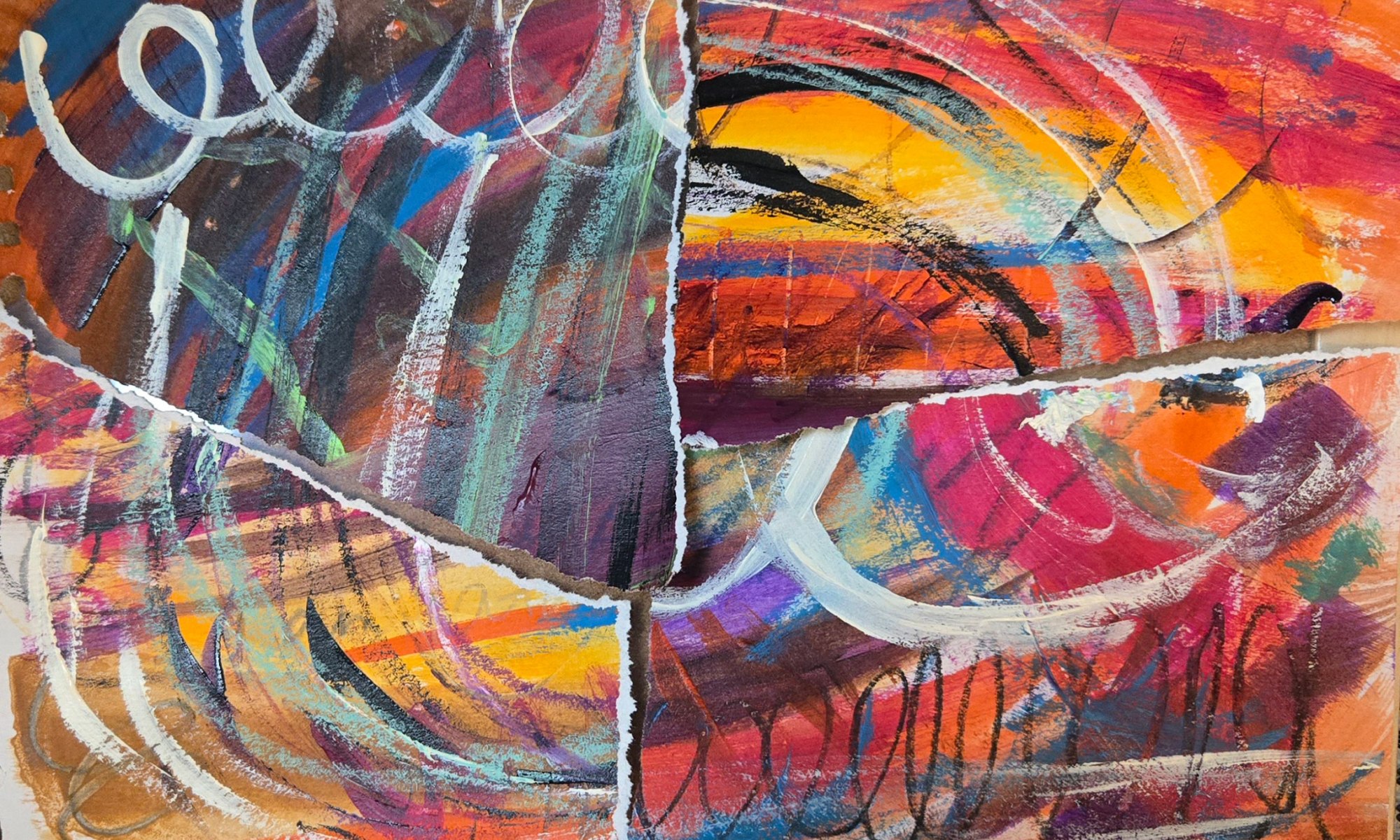
Artwork by Jennifer Gurney.
© The Glacier 2025. All rights reserved.
 The Glacier