The Glacier
Issue Three
Winter 2024
Terminal
Picture me walking down Sunset Boulevard
observing my fat shadow splashed
across the sidewalk. I notice the homeless
have put on weight as I adjust my sweater vest
with a tug. Then tip my Irish cap
to strangers who pass without even a nod.
I glide toward the coffee shop around the corner
carrying poetry in my pocket, and hope
a few vertical lines in a notebook will bear
up later, under scrutiny. These words
like dust blow away from my moving lips,
talking as if I were an out-of-work actor
carrying his own Macbeth. There is no explanation
except I am a bad poet visiting Hollywood,
whose windmills are huge as they spin around
when I depart to the security of a cafe: semi-bustling.
Those cars like combatants I have to face
crossing the street down to Vermont Avenue.
I mug for the pedestrians approaching me
in morning traffic: a poet wearing
a hat in the heat. My eyebrows yawn
under my spectacles, with useless factories,
endless filling stations, and bars,
my Midwestern look of a martyr, walking
to get to the other side of the street
with a Latino doctor and his handsome brown eyes,
movie good looks, a nametag bouncing
against his white shirt, right here before
the Children’s Hospital, who with a lifted
gaze perhaps diagnoses me, the poet, as terminal.
Letters Jim Harrison May Never Read
He walks barefoot through the snow
and doesn’t let the cold bother him
as he unlatches his mailbox. He rubs his bare
head with a hand he has just discovered is real.
The days are full of characters who are divers
for the Grand Marais Salvage Corporation or are known
as Brown Dog. His simple mission is to collect
the growing mail: the large yellow envelopes
from Boulevard Saint-Germain piling up on the ground
from the poets back in Paris he once shared
a 37-course meal at a restaurant in Saint-Père-sous-Vézelay.
They were cooked using culinary guides published between
1654 and 1823, in Spanish and French; and they ate
while reciting Jean-Paul Sartre’s Being and Nothingness,
as if his words were only a kind of early dessert.
His bare feet stare up at him like Chinese fish,
starting to turn purple in the winter light.
He wants to collect his mail and return inside
to Ethiopian coffee before he considers anything more,
like Rimbaud and his slave trade in the heart of Africa.
When he sees a letter in a small crumpled envelope, he wonders
if it’s the woman from Arkansas again, her body
forever on his mind after she sent candid photos of herself
leaning over her palomino without any clothes on.
He was conscious of her nipples pressed against
horseflesh with flies buzzing around her ass.
Then there was a letter he wrote himself to see if he’d answer,
as if there was no other way to question existence.
Unless it was a pinball machine in Paris,
or some cafe in Casper, Wyoming that never gave a shit
if he drank all day without wearing trousers
or made sure the cook roasted enough pigs to persuade
the entire town to eat themselves before the sun sank.
Postcard from Paris
for Jonathan Johnson
I was holding your postcard which was small
as a driver’s license with handwriting like matchstick ends,
attempting to read what you wrote about Shakespeare
and Company. I had not moved from my chair
and my eyes shone upon the ancient routes,
drinking coffee with your words. You told me

how the bookstore smelled of mold and coffee,
also relating that maybe dishes you heard clattering
into a sink were the bird-size bones of those writers
who once visited this famous bookstore not far
from the Latin Quarter or the River Seine.
Back in the cold of the Upper Peninsula

I had been reading a Blaise Cendrars poem,
poet and painter with one arm from the trenches
who had penned “The Prose of the Trans-Siberian
and of Little Jeanne of France.” He learned
how to paint one-handed, still a young man
who gazed out ice-crusted windows fascinated

by hunger cold plague cholera and the muddy
waters of the Amur carrying along millions of corpses.
The last train left Moscow, risking the Revolution
that liquified villages. Little Jeanne, the whore,
slept beside Cendrars. Her body was strangely naked in his dreams
of alarm clocks and an assortment of Sheffield

corkscrews. And if you were a painter you’d splash everywhere.
I think we were all slightly crazy, Blaise wrote,
and that an overwhelming delirium brought blood
to the exhausted faces of my traveling companions.
But you, Jonathan, were just as crazy, sleeping
upstairs at Shakespeare and Company. Or that’s

what I imagined when your postcard arrived.
You probably were sleeping in a hotel bed.
No words roared like a forest fire from the poetry
you read. But, dear friend,
let’s picture all the coffins from Malmo
filled with canned goods and sardines in oil,

and how the River Seine drifted along
with the currency of leaves,
and you could expect anyone to come walking up
to the famous bookshop, even a monk
from the seventeenth century,
looking at today’s riches that floated beyond us.
At Big Pink Where Bob Dylan
Hangs His Hat Most of the Time
Some say there was nothing on that road
but a rock star who for a while would climb
down from fame, rest in country shade after crashing
his motorcycle on Striebel Road; nothing for him
but to hide behind a farmer strolling
through his sun-kissed crop of hay.
He believed his motorcycle on its own volition
could chase him down to his old dusty manual
that left him to squint at nicotine keys.

The avocado-colored phone off in the kitchen
and the formica table covered with coffee cups,
mostly empty, along with cigarette packs,
next to sheets of scribbled lyrics. Bobby tore back
the manual carriage after completing a phrase
to match Richard Manuel’s melody for “Tears of Rage,”
and stared at it, as if he didn’t know what was next.

His beautiful wife Sara, once a stripper in a club
who caught the eye of that short fellow
from Dinkytown, kept calling every hour,
wondering when he would be coming home
for dinner. Still recording at Big Pink,
he straddled the basement steps for the Tapes
he hoped would hit vinyl; or something
on the softly cracked subterranean style
of “Yazoo Street Scandal” nobody
would bother to breathe into a microphone.

Dylan at the typewriter, his cigarette ember
his burning third eye of a prophet, was ready
to see something on par with lightning striking a giant oak.
Richard Manuel watched him as he stood up
slowly from his chair, all the words he wrote today
assaulting him one more time. Bobby saw it clearly,
darker than the crows on the clothesline,
out of the corner of his eye, that fame
which toppled his motorcycle, the harvest
whose weight he couldn’t bear as a folk singer
or rock and roll messiah for a generation
he didn’t want a thing to do with.

The prophet lit a cigarette to take with him
down wherever they were going in song,
hoping there was a way to return as normal men
who could rock in chairs on the porch
and talk about growing old.
On His Sixty-First Birthday One Could See Francisco Tadeo Isidoro Dancing in His Music Repair Shop
Francisco danced a tango to the vinyl record
of an Iraqi orchestra, not caring he turned sixty-one
and the cigarette in his hand would probably
kill him; he was going to celebrate the cobwebs
he brushed away from his past in his repair shop.
His whiskey he made himself in his backyard shed,
sipping the minutes like a clock that tasted of charcoal,
all those honeyed ingredients that he poured in later,
like words from the blind fictionist named Borges.
The irregular troops beating their way north
to join the divisions under the command of Lopez.
Francisco, taking off his shirt, looked down
on his bouncing belly and his Excelsior accordion
like a snowy owl who had flown in from a window.
He boldly kicked out one foot, then the other,
not caring he was sixty-one today; in his repair shop
he smelled of cigarette smoke and whiskey drunk.
But the police detective, Mendez, had come again
to inquire about his missing wife, Patricia,
who was accused of murdering a policeman,
for that animal had assaulted her sister.
In those tremulous depths of his birthday
the secret was lurking, so he began strumming
a classical guitar with Willie Nelson’s autograph
on the pickguard. Francisco was sure Mendez
never read Borges, and he felt bendable as catgut
when he matched a tune to his own destiny.
A dead man from the labyrinth of Mexico City,
what did his name matter when Mendez
aimed his cold barrel at the musician? But he told
him anyway, if you are going to kill me, please
regard the corpse as one Francisco Tadeo Isidoro.
And know today it is my birthday, and pour
yourself a whiskey to help me pass over
the rooflines and inexhaustible repetitions
of every man’s confusion on this heavenly day.
Miles Davis Playing on His Turntable
Reese scraped back his folding chair from the table,
his feet lost in these steps waltzing
him barefoot across the cold floor. His turntable
was playing a record of Miles Davis,
its needle igniting his loneliness
again on this lonely night in Paris. America
so far away from him, like his jacket with
soft pink pockets full of postcards never mailed to
family who were all strangers now
in those places he could never call home.

They were shooting people at the Bataclan,
and he looked for his old shoes as he bent
down to reach under the table filled with dinner plates
and a bottle of Bordeaux
only half drunk–to hell with socks,
he decided, thinking of his grandson who wrote him letters,
crooked block words, a blockhead sergeant
who boxed for blood lust, but good hearted too.
Up on his ledge he kept a photo of him,
to remind his aging heart that he had kin.

If he thought more than two minutes about it,
but he never did that now after his seventieth birthday—
a man who vowed to never return home
after Germany surrendered, a decision made in Munich
of all places, where he had reposed
in Hitler’s bathtub with the Vogue journalist,
Lee Miller, both of them wearing only their steel helmets.
and he should have kissed her when he had the chance
before she poured the tub full of steaming hot water.

Leaving the kitchen table to fight, spilling a splash
of bitter Ethiopian coffee he drank every day,
he slipped on his goddamn shoes, no socks necessary
as he hung his wire-rims around
those radar station ears and checked his Glock
to see if it was loaded. Full fucking clip, and down the stairs
like a crazy man, swinging his arms around like haymakers
in the Tenth Arrondissement, he imagined the cordite smell.

He’d fire high at the head of the first bastard,
then low into the gut, if he wasn’t shot himself,
but at seventy he’d take his chances, and let his grandson’s
letters pile up like slightly read newspapers–
he wrote about boxing, battering a man’s face
called Sugar Baby–and Reese closed his eyes
and was back at the farm, with the wind in his hair
threading together his wife pregnant with a son he’d never meet.
His grandson told him in one of the letters
his father made an art of drawing naked women–

he got well paid for them, many of them used
for illustrations in novels or magazines–
and he had sent one for his grandfather
 to size up and the only thing he saw was a coward
who never joined up unlike his son who had fought in Fallujah.
For a minute he was twenty years old, and considered
a short burst into a policeman’s bullet-proof vest
who told him to stop walking toward him—his Glock
was concealed in his open shirt, and his heart,
with a hole in it, soon juddered, and he fell hard

his wire-rims flying off, and if he didn’t see
her hands he felt them grasping his,
her name Monique she whispered sweetly,
despite people being killed–
and he beheld her blonde blur
helping him stand up–he’d stagger all the way back
to his apartment, almost crying, not for her as much
as himself, alone again, and without family, his glasses
not found, as he hated this life suddenly
holding his gun close to his heart.
Russell Thorburn is the author of four books of poems. Somewhere We’ll Leave the World, published by Wayne State University Press, draws on the poet’s own experiences while imagining fictional characters and personal heroes. In a previous book, Misfit Hearts, he chronicles the making of The Misfits through the filming-location photographs of Clark Gable, Marilyn Monroe and Montgomery Clift. In Let It Be Told in a Single Breath, his latest book published by Cornerstone Press, University of Wisconsin-Stevens Point, he picks up where he left off with recurring characters and a younger self in dislocations of time and space. He has received numerous grants, including a National Endowment for the Arts Fellowship. The Upper Peninsula’s first poet laureate, Thorburn teaches composition at Northern Michigan University.
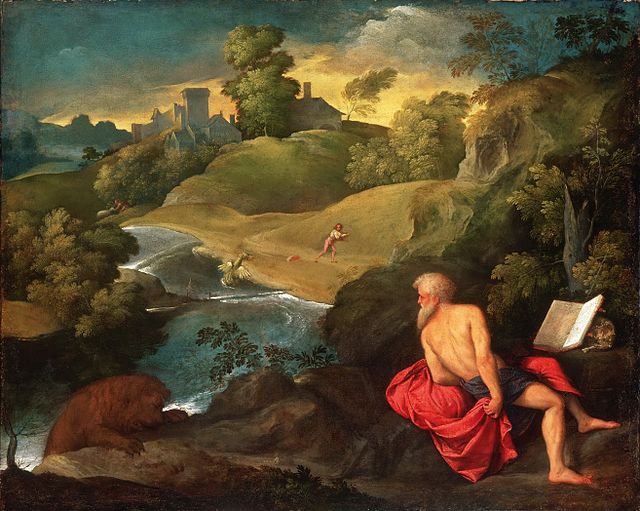
Artwork by Paris Bordone.
© The Glacier 2024. All rights reserved.
 The Glacier